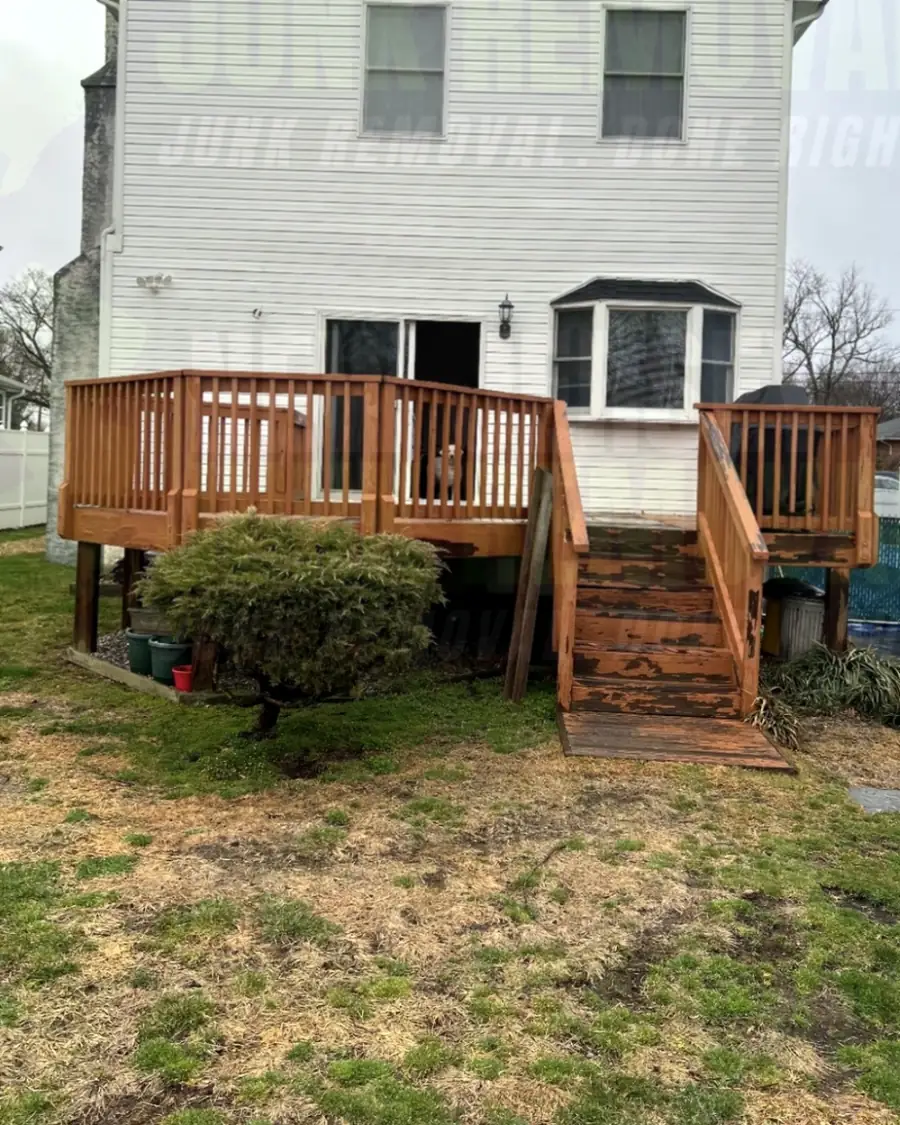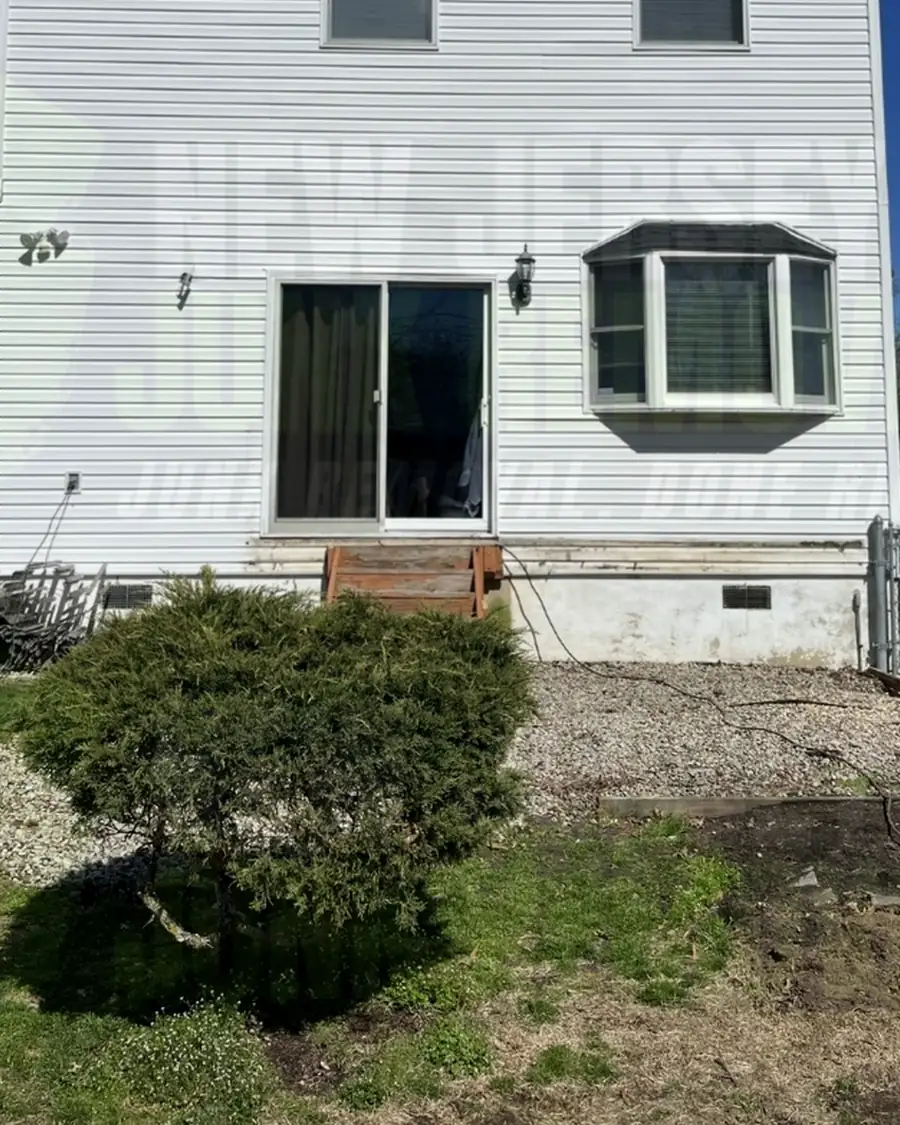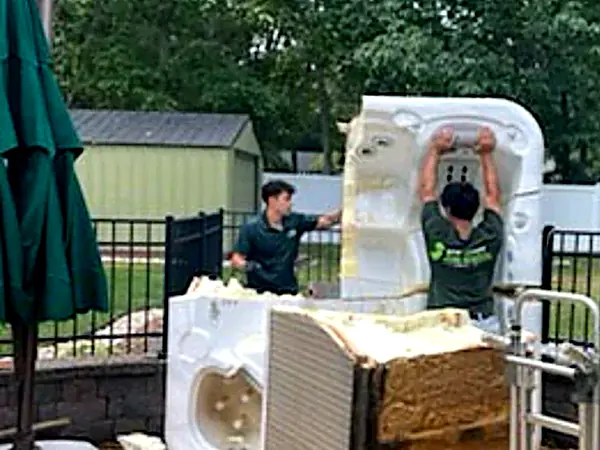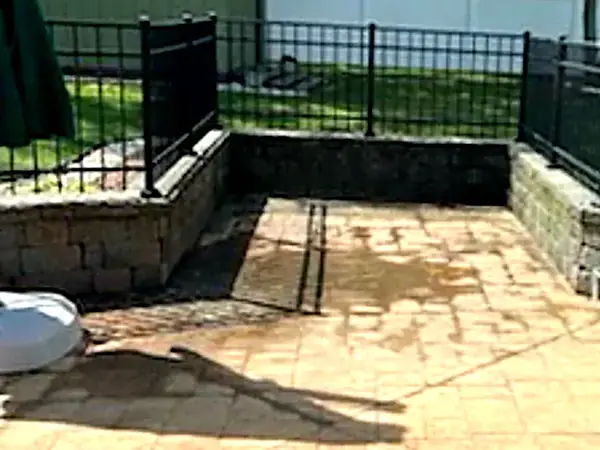
What deck removal includes
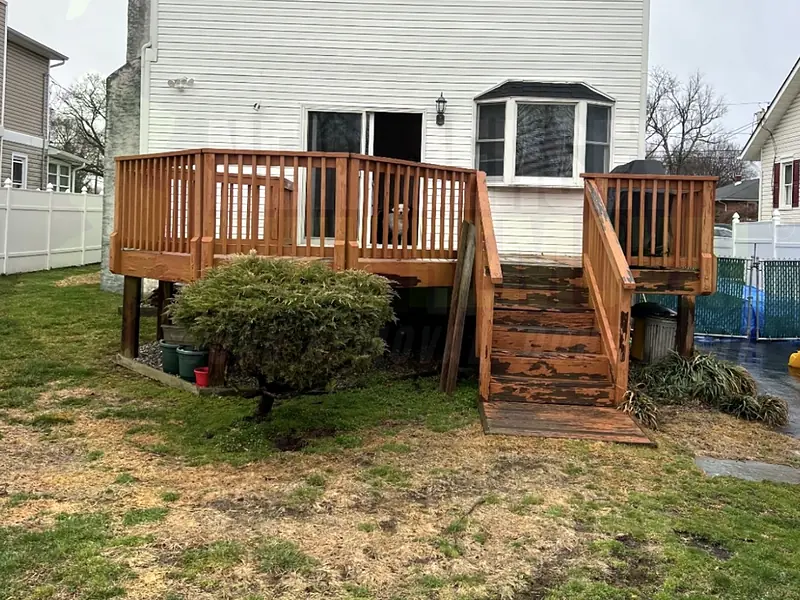
We take a deck down in roughly the reverse of how it was built: railings and stairs first, then the deck boards, then the joists, beams and posts. Each piece is cut to a size that fits on the truck, carried out of the yard and loaded. Dominic, the owner, works the jobs himself with his crew.
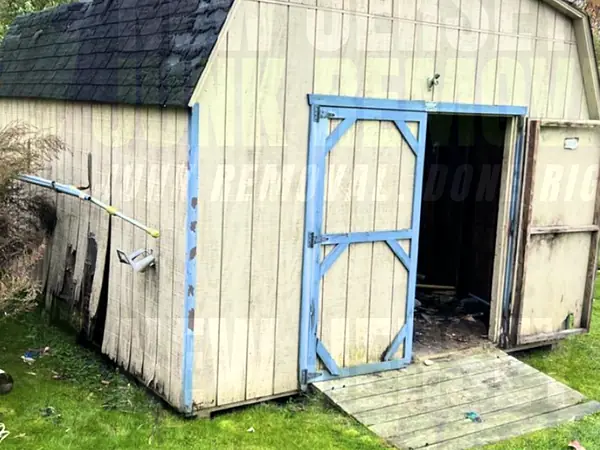
Whatever has collected under the deck can go on the same trip, like old planters, scrap lumber or a firewood rack. Show it in your photos so it's part of the price. When we're done, what's left is the bare ground or gravel that sat under the deck.
Decks we take down
Low or high, attached or freestanding, we take them apart and haul them off:
- Ground-level platforms and raised decks, with their stairs and railings
- Pressure-treated wood, cedar and composite decking
- Decks bolted to the house and freestanding decks out in the yard
- The deck around an above-ground pool or under a hot tub, quoted as one job with the pool or tub
Before removal day
A few steps are on your side. Handle them ahead of time and removal day stays simple.
- Call your town's construction office and ask whether your deck needs a demolition permit. New Jersey's construction code generally requires a permit before a structure is demolished, and it has to be in place before we start.
- If the deck has lights, outlets or a fan, have a licensed electrician disconnect them first. We don't do electrical work.
- Move propane tanks off the deck. We can't take them.
- Take off the furniture, grills and planters you're keeping.
- Tell us about gates, slopes or tight spots between the deck and where a truck can park.
Old deck boards and treated wood
A deck built before 2004 may be made with lumber treated with chromated copper arsenate, or CCA. According to the U.S. EPA, CCA-treated wood was used in residential structures like decks until December 2003, when manufacturers stopped making it for homeowner uses.
The EPA says not to burn CCA or any other preservative-treated wood at home, and not to reuse CCA-treated wood as mulch. So an old deck shouldn't end up in the fire pit or the garden bed. We haul it away with the rest of the load.
Where your old deck goes
Deck lumber goes to the licensed facility for the county the job is in: the Monmouth County Reclamation Center in Tinton Falls, the Ocean County Landfill in Manchester, the Burlington County Resource Recovery Complex, or Duck Island in Hamilton for Mercer and Middlesex jobs. The Monmouth facility only accepts waste from inside Monmouth County, which is why every load is routed by county.
Concrete travels separately. County facilities like the Monmouth County Reclamation Center don't take loads of concrete, so any concrete we haul goes to a licensed recycler such as Mazza Recycling in Tinton Falls, where it's crushed for reuse as fill and drainage stone. Metal brackets, hardware and aluminum railings go to a local scrap yard.
Don't count on curbside bulk pickup for an old deck. Wall Township, for example, lists decking and wooden sheds among the items it won't pick up on bulk days.
Getting a price and a date
Text photos of the deck from a couple of angles, plus the path to the driveway, to (855) 655-7552. Dominic often quotes from photos. If you'd rather have someone look in person, book a free estimate online. Either way, the whole take-down gets one price.
Once any permit and electrical work is taken care of, same-day and next-day openings are often available. On the day, we text before we arrive, take the deck down, load every piece and clean up where it stood.
We remove decks across Monmouth, Ocean, Burlington, Mercer and Middlesex counties, from Freehold, Howell and Toms River to Hamilton and Bordentown. We're an NJ A-901 licensed hauler, registered with the NJDEP (#0042737), and insured.
How pricing works for deck removal
Deck removal is priced per job, not per truckload, because taking the deck apart is most of the work. The price depends on how big the deck is, how high it sits, what it's built from, and how far we carry the pieces to the truck. A low platform beside the driveway is a lighter job than a second-story deck with long stairs at the back of a fenced yard. A hot tub or pool coming out with it, or junk stored underneath, adds to the scope. Show any concrete footings in your photos and you'll hear up front what's included. Every job has a $250 minimum. Your price covers the take-down, carrying, loading, hauling, disposal fees and cleanup, and it's the price you pay. If you add something on the day, you hear the new price before it goes on the truck.
Every job is priced individually. The price we quote is the price you pay — no hidden fees. See how we price jobs.