The short list, and why
Everything that comes off a junk removal truck goes to a donation center, recycler, transfer station or landfill, and the disposal sites turn away liquids and hazardous materials. The Monmouth County Reclamation Center, for one, prohibits any liquid or hazardous material and sends residents to the county's hazardous waste facility instead. So these stay out of every load we haul:
- Paint, stains, varnish and thinner
- Household chemicals: cleaners, pesticides, weed killers, pool chemicals, solvents and gasoline
- Motor oil and other auto fluids
- Propane tanks of any size
- Asbestos, including old roofing, siding or insulation that may contain it
- Medical waste: needles, sharps and medications
Your county's hazardous waste program
Each county in our area runs a household hazardous waste program for residents. Bring proof of residency, keep products in their original labeled containers, and check the current schedule and limits before you load the car.
- Monmouth: a permanent Household Hazardous Waste Facility at 3211 Shafto Road in Tinton Falls, open to county residents with no appointment needed. Rental vehicles and vehicles with commercial plates aren't allowed.
- Ocean: collection days at rotating public works sites around the county, with online registration required. Residents can also bring electronics, paint, used oil and light bulbs to the special waste buildings at the county recycling centers in Lakewood and Manahawkin.
- Burlington: a permanent facility at the Resource Recovery Complex, 22000 Burlington-Columbus Road. County residents don't need an appointment, and commercial or rented vehicles aren't accepted.
- Mercer: the Mercer County Improvement Authority holds household chemical and electronics disposal days at the John T. Dempster Fire School in Lawrence a few times a year.
- Middlesex: free hazardous waste drop-off days at rotating sites for county residents. Containers over 10 gallons aren't accepted.
Paint
Latex paint isn't hazardous waste. Monmouth County and Hamilton Township both say to dry it out first, by leaving the lid off or mixing in kitty litter or another absorbent, then put the dried can in your household trash with the lid off.
Oil-based paint, stains, varnish and thinner go to the county hazardous waste program. Middlesex County also runs monthly paint drop-off days at town sites, including Old Bridge, Monroe, East Brunswick and South Brunswick, that take both latex and oil-based paint from residents.
Chemicals and motor oil
Cleaners, pesticides, weed killers, pool chemicals, gasoline and solvents all go to the county hazardous waste program. Never pour them down a drain, onto the ground or into a storm sewer.
Used motor oil is the one most people have sitting in the garage. The NJDEP's advice: pour it into a clean container with a cap that closes tight, keep antifreeze and paint thinner out of it, and take it to a used oil drop-off in your county. Oil from mowers and snow blowers counts too. Monmouth County's recycling guide lists town recycling centers that accept used motor oil, and the county facility in Tinton Falls takes it as well.
Propane tanks
Grill-size propane tanks go to the hazardous waste programs in Monmouth, Ocean and Middlesex counties. Burlington's hazardous waste facility only takes one-pound cylinders, but the Resource Recovery Complex itself accepts propane tanks as a separate, segregated item.
Monmouth County's guide also notes that many gas stations and home centers give credit when you trade in an old tank, and Monroe's public works yard takes barbecue tanks.
Asbestos
Asbestos was a common building material before 1980, so old roofing, siding and insulation deserve a second look before a renovation cleanout. Keep it intact, since breaking or crushing it releases fibers. Under New Jersey rules, anyone other than the homeowner who removes asbestos from a home has to hold a license from the state Department of Labor, and the packaging and disposal rules apply to everyone.
For disposal, the Monmouth County Reclamation Center takes asbestos by appointment and gives handling instructions when you call. Burlington's hazardous waste facility accepts non-friable asbestos that came from a residence. Middlesex County's drop-off days take it with pre-registration, double bagged. Ocean County's collection days don't accept it, and Hamilton residents doing their own removal are told to call the county improvement authority first.
Medications and needles
Unused medications go to a Project Medicine Drop box. The program is run by the New Jersey Division of Consumer Affairs, the boxes sit inside participating police department headquarters, and drop-offs are anonymous any day of the year.
Home-use needles go into a rigid plastic bottle with a screw cap, such as a laundry detergent bottle. Tape the cap, label it, and put it in the trash, never the recycling. Some hospitals take sharps as well. The Ocean County Health Department lists several, and Burlington County points residents to Virtua's safe syringe program.
What we can take that people assume we can't
Some items have their own rules in New Jersey but aren't hazardous, and we haul them:
- TVs and computers. State law keeps them out of the trash, and we take them to licensed electronics recyclers.
- Tires, which go to a licensed recycler.
- Concrete, which goes to a licensed recycler.
- Refrigerators, freezers and other appliances. Our refrigerator and appliance disposal guide explains the refrigerant rules.
- Scrap metal, which is recycled.
When it's easier to have us haul it
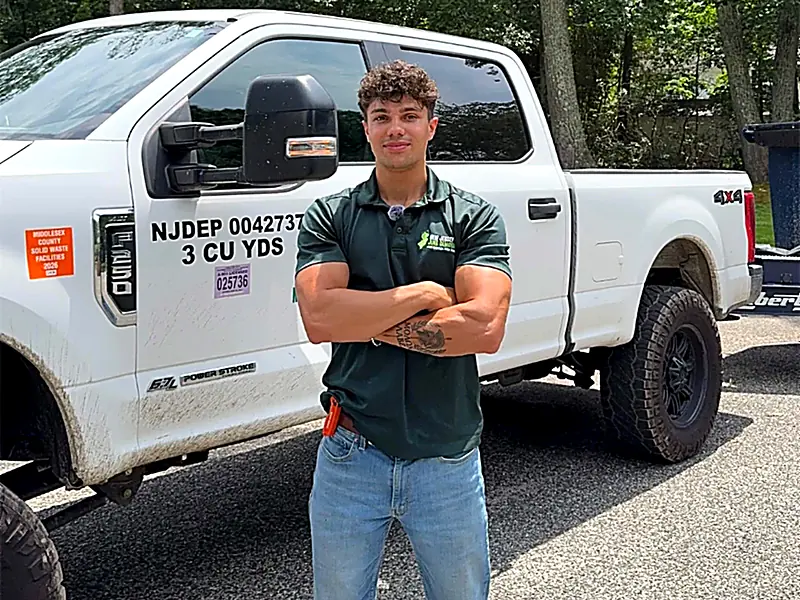
Set the paint, chemicals, oil, propane and anything that might be asbestos aside, and we'll take the rest: furniture, appliances, electronics, tires, concrete, and whole garages and basements. Dominic works jobs himself alongside his crew, and we do all the lifting and carrying.
Not sure about something? Text a photo to (855) 655-7552 and we'll tell you whether it can go, along with one upfront price for the job. Same-day and next-day openings are often available. See our garage cleanout and basement cleanout services.