Why refrigerators are handled differently
Refrigerators, freezers, window air conditioners and dehumidifiers hold refrigerant, the gas many people still call Freon. Under the federal Clean Air Act rules, the last stop in the disposal chain, usually a scrap metal recycler or a landfill, is responsible for making sure that refrigerant is recovered before the appliance is crushed or buried.
If the refrigerant was already taken out before the appliance arrived, that facility has to keep a signed statement showing who recovered it and when. The EPA does not accept a sticker as proof. Federal rules also prohibit knowingly venting most refrigerants when an appliance is thrown away, so leave the lines alone and don't try to drain it yourself.
That's why many town pickups, recycling yards and scrap dealers refuse refrigerators, ask for proof the refrigerant is out, or run them through a separate collection. Washers, dryers, stoves and dishwashers have no refrigerant, so they're simpler. They usually go out as scrap metal, often called white goods.
Option 1: Your town's appliance pickup or drop-off
Most New Jersey towns handle appliances through public works, and the rules change from one town line to the next. Monmouth County's recycling guide says many towns take washers, dryers and stoves at the curb or at a town drop-off, but only a few accept appliances with refrigerant. The county's Reclamation Center in Tinton Falls doesn't accept large metal appliances at all.
Here's how a few towns in our area handle it right now:
- Hamilton (Mercer County): public works picks up refrigerators, freezers and air conditioners at the curb after you put in a Freon/Metal Pick Up request through the township's HamStat service. All doors must come off first. Residents can also drop them at the township's Ecological Facility.
- Monroe (Middlesex County): residents can bring refrigerators, freezers and other bulky appliances to the public works yard on Gravel Hill-Spotswood Road. The township says the doors must be removed under state law.
- Freehold Township (Monmouth County): the township recycling center does not take refrigerators, freezers, air conditioners or dehumidifiers, and it points residents to a scrap metal yard.
- Ocean Township (Monmouth County): residents must have the refrigerant removed and show public works proof of removal before an appliance is collected.
Option 2: A utility pickup, if it still runs
If the fridge or freezer still works, check with your electric company first. JCP&L and PSE&G both run appliance recycling programs that pick up old, working units and recycle them, usually with a rebate check. Offers change through the year, so check the current terms when you book.
The basic rules match. You have to be the utility's electric customer and own the appliance, and a refrigerator or freezer has to measure between 10 and 30 cubic feet and be working when the crew shows up. Room air conditioners and dehumidifiers only go along with a qualifying fridge or freezer. PSE&G's program doesn't take mini-fridges or Sub-Zero units, and it wants units empty, clean and defrosted.
A broken refrigerator won't qualify for either program.
Option 3: The store delivering your new one
Replacing the appliance? Ask the retailer whether the delivery crew will haul the old one away. Monmouth County's recycling guide recommends exactly that for refrigerators and air conditioners. Ask before you buy, not on delivery day, and have the old unit emptied, unplugged and easy to reach.
Option 4: Drive it to a county facility
Burlington County residents can take appliances with refrigerant to the bulky materials area at the Burlington County Resource Recovery Complex on Burlington-Columbus Road. The county wants these units delivered uncompacted, kept apart from other metal, with the refrigerant lines intact. Metal appliances can't be landfilled there, and the Complex turns away waste delivered in rented trucks or trailers.
In Monmouth County, the Reclamation Center won't take large metal appliances, so your choices are your town's program or a licensed scrap metal facility. In Ocean County, start with your town's public works department. The county recycling centers in Lakewood and Manahawkin are set up for recyclables and special waste like electronics, paint and used oil.
Call ahead wherever you go. Scrap yards and transfer stations set their own rules for refrigerant appliances, and federal rules make them answer for the refrigerant.
Getting the appliance ready
- Empty it, unplug it and let it defrost a day ahead so it doesn't leak across the floor on the way out.
- Shut off and disconnect the water line to an ice maker or water dispenser, and drain the drip pan.
- Have a gas range or gas dryer shut off and capped by your gas utility or a licensed professional.
- Take the doors off before a fridge or freezer goes to the curb. Hamilton requires it, and it keeps kids from climbing inside.
- Leave the refrigerant lines alone. Venting most refrigerants is against federal rules, and Burlington County wants the lines intact when a unit arrives.
When it's easier to have us haul it
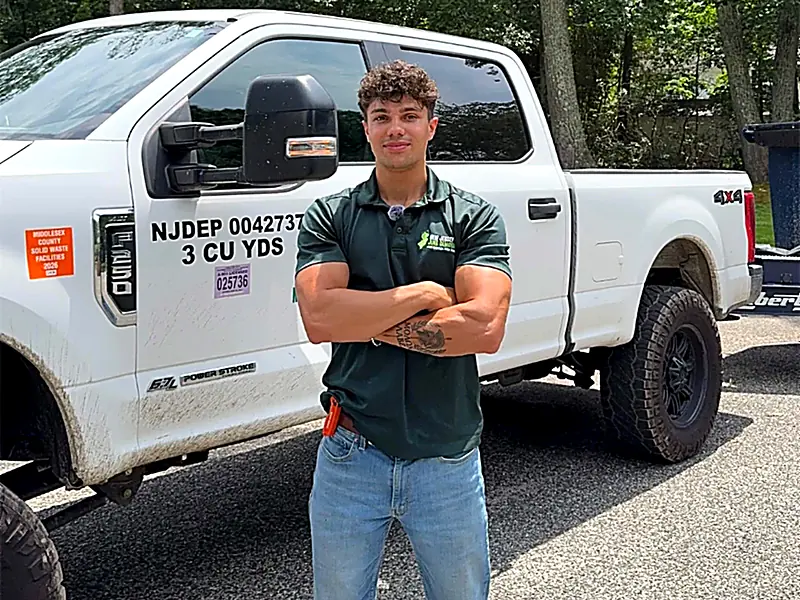
A refrigerator in the basement, up a flight of stairs or wedged into the back of a garage is a two-person job with a truck and a dolly. We take refrigerators, freezers, washers, dryers, stoves and other appliances, carry them out from wherever they sit, and handle the drop-off at a licensed facility. Dominic works jobs himself alongside his crew.
Text a photo of the appliance and where it's sitting to (855) 655-7552 for one upfront price, or book a free estimate. Same-day and next-day openings are often available. If the rest of the garage needs to go too, include it in the photos and we'll price it as one job. More on our appliance removal service.